A tag should connect articles that a reader might reasonably want to explore together. It is not a list of every word mentioned in a post. When tags are created casually, a site can accumulate dozens of archives containing a single article. Those pages add navigation without offering much of a collection.
Categories usually describe the main shelves of a publication. Tags can describe a connection that crosses those shelves. In a gardening journal, a category might cover containers while a tag identifies shade. The same shade tag could connect an article about balcony pots with another about a sheltered courtyard. That relationship gives the tag a reason to exist.
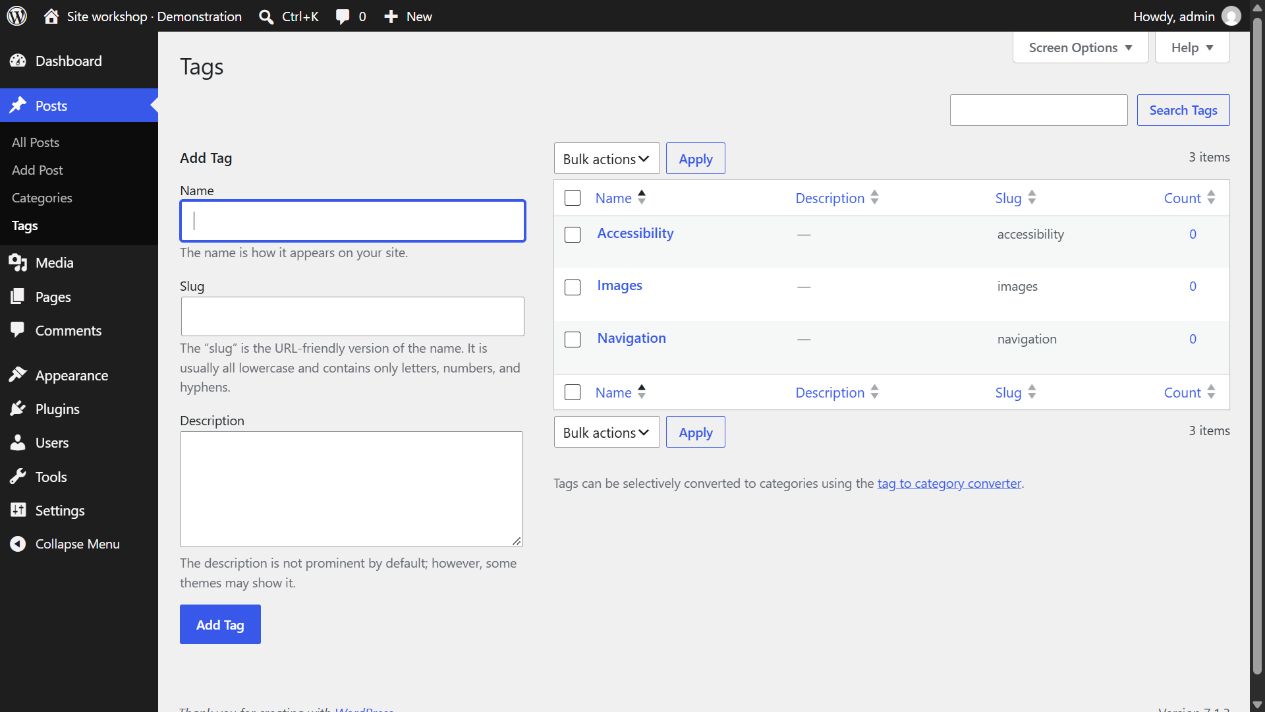
WordPress tags do not have parent and child levels. They are also optional for ordinary posts. You do not need to add a tag merely because the field is available. If categories and related links already provide a clear route, leaving the tag field empty can be the cleaner editorial choice.
Keep a short list of accepted tags and their meaning. Decide whether the label is singular or plural, and avoid creating near-duplicates such as Small Spaces and Small Space. Before adding a new term, search the existing list. A consistent vocabulary becomes more valuable as multiple people contribute content.
Read the resulting archive as a visitor. Would the articles make sense together? Is the label understandable without the original post? A tag called Helpful or New rarely explains a durable connection. A specific material, method or audience can be more useful when several articles genuinely address it.
If an old tag has become redundant, first check whether its archive is linked from menus, articles or external pages. Removing or renaming it may affect those routes. Plan any necessary replacement rather than treating taxonomy cleanup as invisible housekeeping. Tags are worthwhile when they support browsing; they are not a requirement to fill every editing field, nor a guarantee that search engines will reward the page.