An SEO plugin can expose useful controls over titles, descriptions, canonical URLs and other output. It cannot decide whether a page answers a worthwhile question or guarantee where a search engine will place it. Keeping that distinction clear prevents a dashboard score from becoming the purpose of the article.
Start with the output you need to manage. A small editorial site may need consistent title patterns, a sitemap and a way to exclude a particular utility page from indexing. Check what WordPress, the theme and existing extensions already provide before enabling another implementation of the same feature.
Treat suggested writing scores as prompts for review. Repeating a phrase to satisfy a density indicator can make the page less readable. A short answer does not become more useful merely because a tool wants more words. Evaluate the searcher's task and the accuracy of the content first.
Inspect a published example
After changing a title or description, inspect the delivered page source or an appropriate preview tool to see what the site actually outputs. Search engines may display a different title or snippet, so an editor preview is not a promise of the final search appearance.
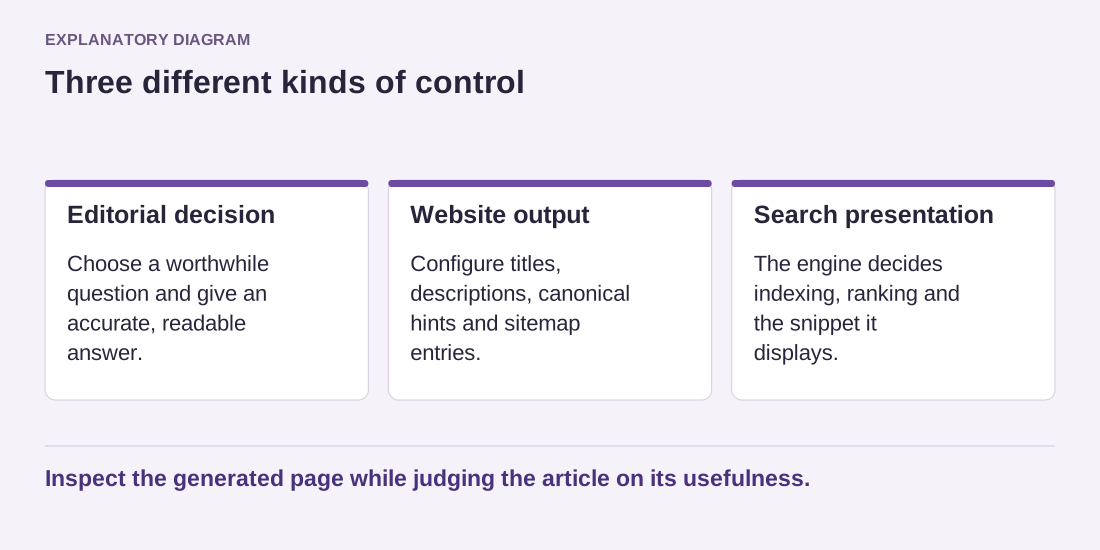
Read the diagram as text
- Editorial decision: Choose a worthwhile question and give an accurate, readable answer.
- Website output: Configure titles, descriptions, canonical hints and sitemap entries.
- Search presentation: The engine decides indexing, ranking and the snippet it displays.
Inspect the generated page while judging the article on its usefulness.
Canonical settings require particular care. They express a preferred URL for related content; they are not a replacement for deciding which pages should exist or for implementing a necessary redirect. Avoid copying a canonical address across unrelated pages to silence a warning. Check the documentation for the exact setting before changing a site-wide rule.
Sitemaps help describe available URLs, but their presence does not guarantee indexing. Review whether the generated list includes the pages you intend to expose and excludes private or irrelevant items as appropriate. Do not confuse an indexing preference with access control.
Choose one tool to own each SEO output, document unusual settings and review a few representative page types after changes. A post, category archive and static page may use different templates. The plugin is most valuable when it makes those decisions visible and maintainable, while the editorial judgment remains with the person responsible for the site.