A redirect may be configured in WordPress, the web server, a hosting control panel or an external service. When rules accumulate in several places, changing a destination in one dashboard may appear to do nothing because another layer acts first.
Create a simple map of the redirects you intentionally maintain. Record the old address, the intended destination, the reason and the system that owns the rule. This is not a list of every temporary browser request. It is a record of publishing decisions that someone may need to understand later.
For a renamed service page, the destination should normally be the corresponding replacement, not automatically the homepage. A visitor following an old link still expects the original subject. If there is no equivalent page, decide how to handle that situation rather than concealing it behind an unrelated destination.
Follow the complete route
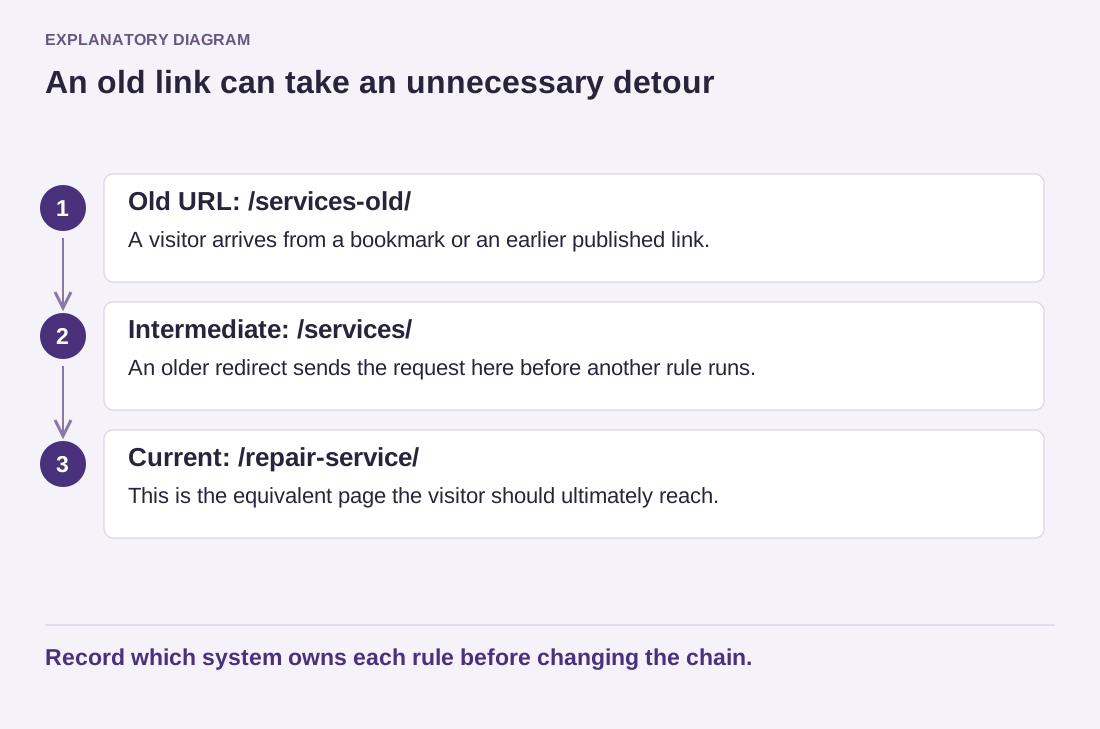
Test the old URL and observe where it ends. A redirect from A to B and then B to C is a chain. When possible, update the intentional rule so A points to the final appropriate destination. Do not change server rules blindly; different hosting environments use different configuration syntax and precedence.
Read the diagram as text
- Old URL: /services-old/: A visitor arrives from a bookmark or an earlier published link.
- Intermediate: /services/: An older redirect sends the request here before another rule runs.
- Current: /repair-service/: This is the equivalent page the visitor should ultimately reach.
Record which system owns each rule before changing the chain.
Distinguish temporary moves from permanent ones using the tool's documentation and the actual publishing plan. The label should reflect the situation, not whichever option appears first. Also check whether query parameters or trailing slashes affect the rule, especially when the old links contain campaign information.
Before retiring a redirect plugin, export its rules and identify which need to continue elsewhere. Deactivating the plugin may stop redirects immediately. Test the replacement in the intended environment and avoid leaving competing implementations that send visitors in loops.
Review the map when pages are merged or removed. Keep useful existing links working, but do not create a broad rule that sends every unknown URL to one page. A clear not-found response can be more informative than a misleading success. The objective is a predictable route from an old reference to the content that now fulfils its purpose.