The header is often shared by many templates. That makes it a useful place for a consistent identity and navigation, but it also gives a small edit a wide reach. Before changing it in a block theme, identify the template part being edited and which page layouts use that part.
A header can contain a logo, site title, navigation and other blocks. Each element should justify its space. Adding a search field, several social links and multiple buttons to a narrow strip can make the main navigation harder to use. Start with the destinations readers need most rather than copying every feature from a theme demonstration.
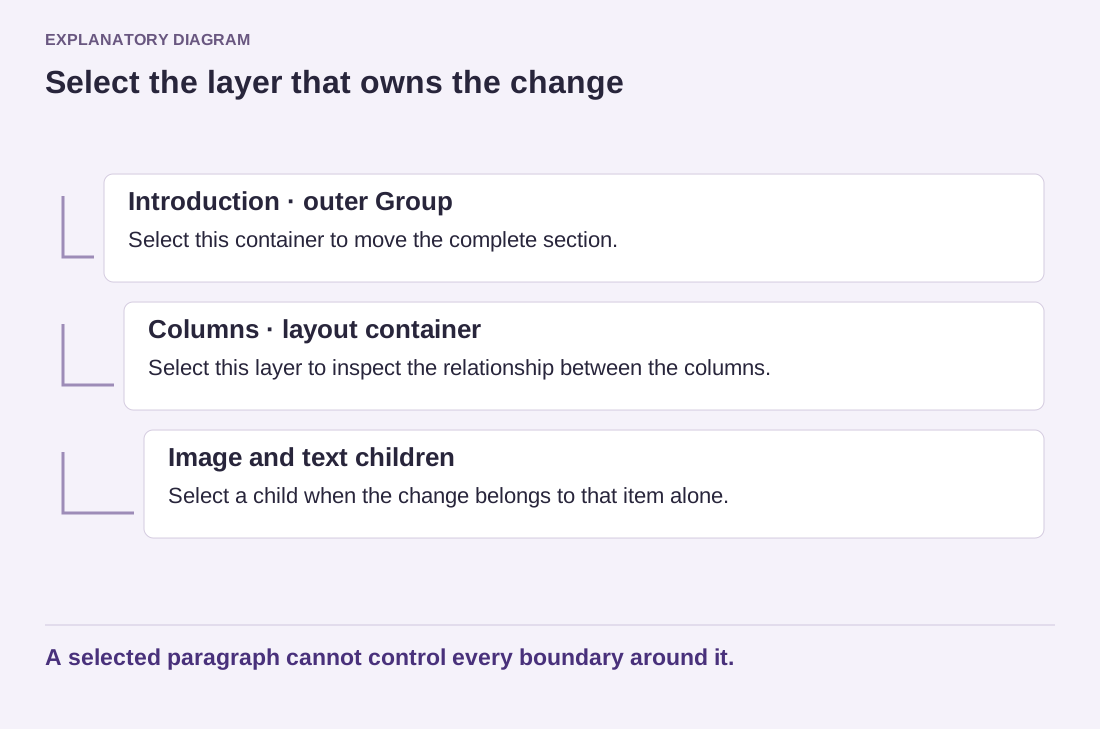
Use List View to understand the container structure. A Row may arrange the logo beside navigation, while an outer Group provides padding or background. Selecting the correct parent matters when adjusting alignment. Changing the logo block's spacing is not the same as controlling the space between the two sides of the header.
Review more than the current preview
A shared header may appear on articles, archives and ordinary pages. After saving, open examples of each. A long page title below the header or a different background can reveal spacing and contrast problems that were not visible on the homepage. If another template uses a separate header part, the change may not reach it at all.
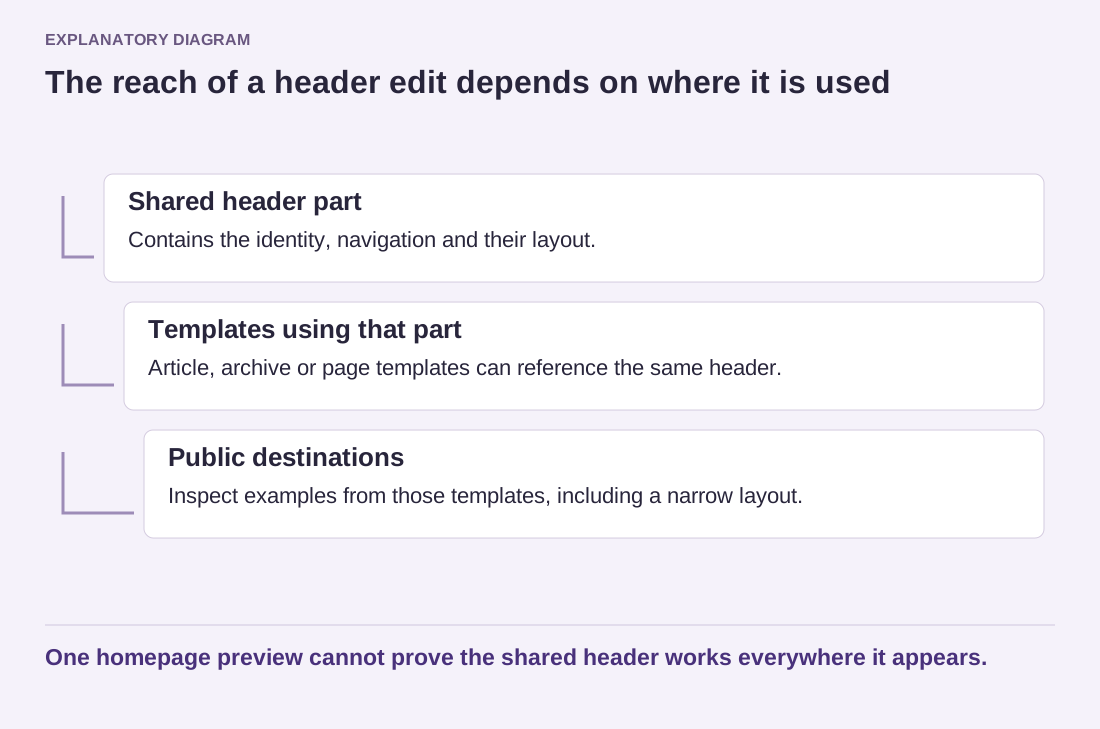
Read the diagram as text
- Shared header part: Contains the identity, navigation and their layout.
- Templates using that part: Article, archive or page templates can reference the same header.
- Public destinations: Inspect examples from those templates, including a narrow layout.
One homepage preview cannot prove the shared header works everywhere it appears.
Test the narrow layout with the actual logo and menu labels. A wide wordmark can compete with the menu control. A header that looks compact on desktop can occupy too much of a phone screen when its contents wrap. Avoid solving that by making essential text too small to read.
Name intentional header variants clearly, such as a simplified layout for a focused campaign page. Do not create a new variant for every minor adjustment without tracking its purpose. Shared parts are valuable because one deliberate change can remain consistent across the site. Keep that benefit by knowing which part you are editing, checking its consumers and documenting genuine exceptions rather than letting nearly identical headers accumulate.