A layout lock can help prevent accidental movement or removal of blocks. It is useful when an editor needs to change text inside a carefully arranged section without rebuilding that section. It is not a substitute for user permissions or a security boundary. Someone with the appropriate editing capabilities may be able to unlock or alter the structure.
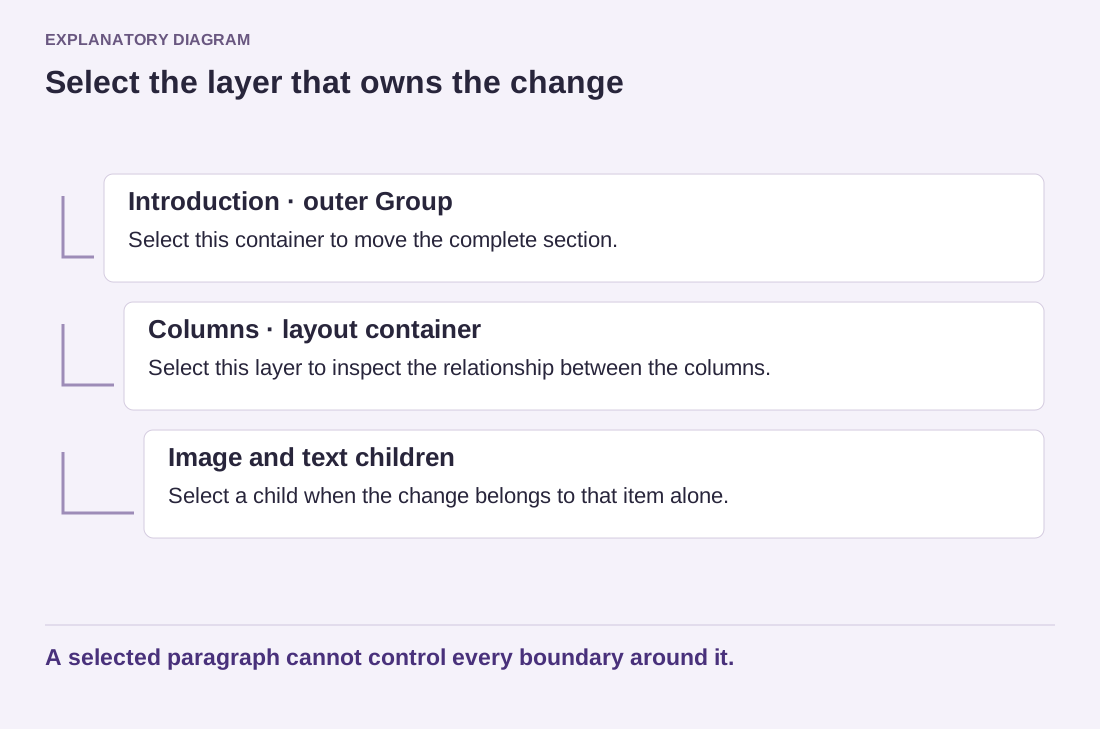
Start by identifying the mistake you want to prevent. Perhaps the outer container of a service card should remain in place, while its description can change. Locking every nested block without a clear purpose may make ordinary editing frustrating. Protect the arrangement that needs stability and leave the intended content workflow understandable.
The block options and lock controls vary with the editing environment. Where available, moving and removal can be controlled separately. Some themes or patterns also use content-only editing arrangements. These are related aids, not identical features. Read the active controls before assuming that one lock means all content is uneditable.
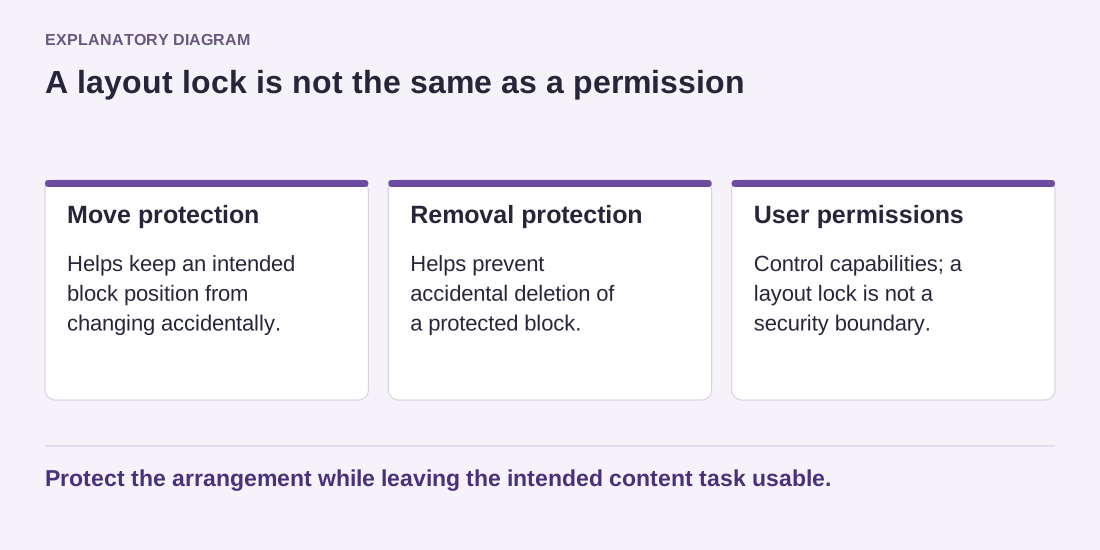
Read the diagram as text
- Move protection: Helps keep an intended block position from changing accidentally.
- Removal protection: Helps prevent accidental deletion of a protected block.
- User permissions: Control capabilities; a layout lock is not a security boundary.
Protect the arrangement while leaving the intended content task usable.
Use clear names for important containers and add the reason for the lock to the project notes. A future editor should know whether the layout is deliberately protected or simply unfamiliar. Explain the approved route for a genuine structural change, including who should review it and how to preview the result.
Try the routine task with the permissions and interface that the editor will actually use. Can they replace the intended sentence or image without moving the section? Can they understand why another action is unavailable? Testing only as an administrator can conceal a confusing workflow for a contributor with different access.
After any unlocking and redesign, reconsider whether the lock still serves a purpose. Do not preserve a protection that belongs to an old arrangement simply because it was already there. A useful lock makes accidental damage less likely while allowing the work people are responsible for. If the only result is that everyone asks an administrator to edit ordinary paragraphs, the boundary probably needs adjustment.